
How to Search the Stinesville Court Docket
Start with the heading on the paper. A notice naming Monroe Circuit Court, or a number starting with 53, belongs in Indiana MyCase. The codes 53C01 through 53C09 mark Monroe’s nine Circuit divisions. MyCase also works with a citation number or a party name. Pick Monroe County and open the matching case summary. A Stinesville ordinance fine takes a different path. Begin at Town Hall, since the town payment page is not a judicial search. When online tools fail, call the town Clerk about an ordinance record or the Monroe Clerk about a court record. County records are also available at the counter or by mail.
- Identify the issuer and record type.
- Use MyCase for a Monroe court filing.
- Use Town Hall for a Stinesville ordinance.
- Read the newest event or current town notice.
- Confirm the deadline before acting.
Stinesville Fine Page Is Not a Docket
The fine page handles payments, not cases. It offers no fields for party names, case numbers, judges, court dates, or docket events. Its external payment link takes money. But a processor keeps no court record. A receipt proves you paid. It is not a court disposition or a Chronological Case Summary.
Key distinction: A Stinesville ordinance fine can remain a town administrative matter without creating a Monroe Circuit Court case.
Check for a Monroe cause number before using MyCase. A notice citing only a town ordinance? Ask the Stinesville Clerk about the amount, the record, and how to respond. A state citation or Circuit division means the county route.
The Stinesville Municipal Court
No separate Stinesville municipal trial court exists. The official court directory lists none. The town site offers only Town Hall, Town Board, ordinance, record-request, and fine links. There is no judge roster or docket calendar. Monroe Circuit Court serves as the unified trial court for filed judicial cases from Stinesville. Its nine divisions cover criminal, civil, family, probate, juvenile, small-claims, eviction, infraction, ordinance, protective-order, and related matters. A town label on a notice does not add a judicial tier. Figure out whether the item is town administration or a county filing. Then contact the matching clerk.
Stinesville Town Hall Record Route
The official Stinesville site gathers the Town Hall, meeting, ordinance, and record resources in one place. It is the local starting point for town matters.
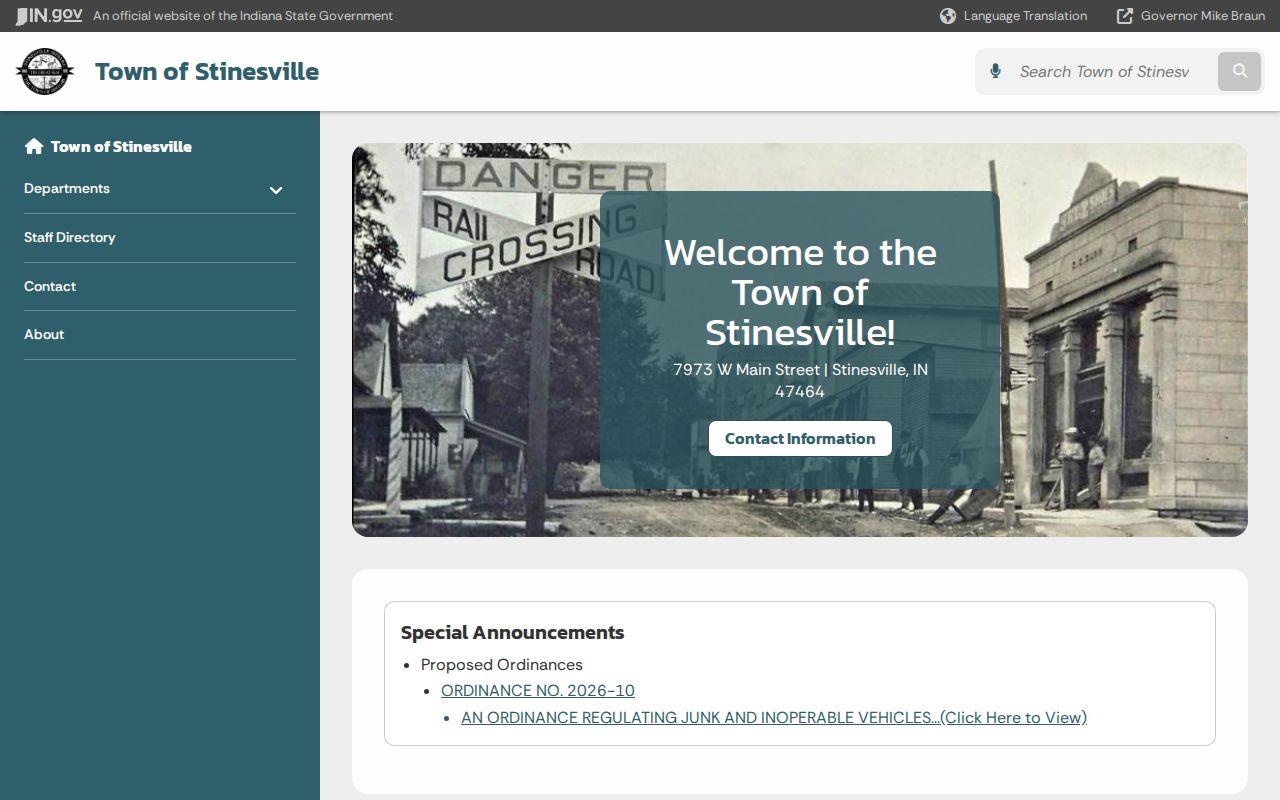
Town Hall sits at 7973 W Main Street, Stinesville, IN 47464. Call 812-379-8757 or email townboard@stinesville.in.gov. This office handles town ordinance questions, payments, meeting records, and local requests. The Stinesville contact page links the town records request form. That page shows the route for submitting a request.
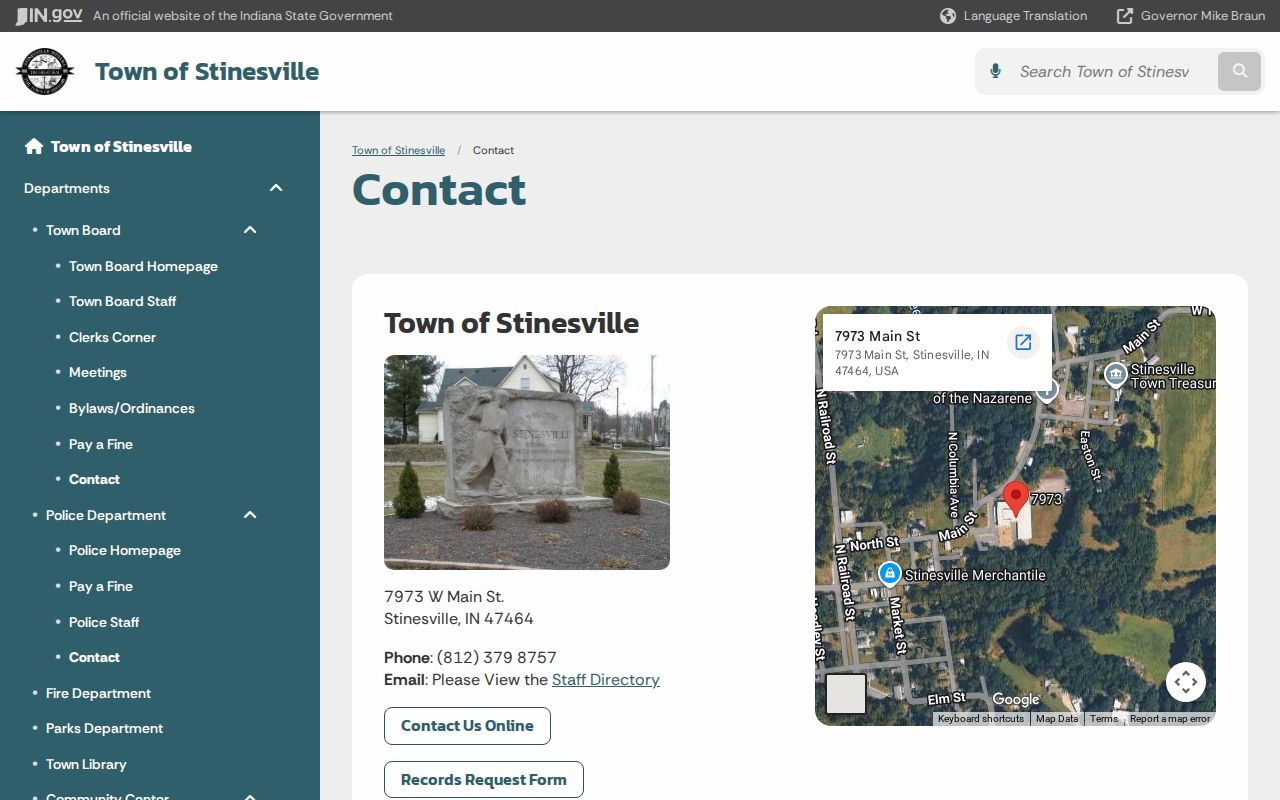
In the request, describe the ordinance, date range, department, and format you want. Judicial filings and certified copies come from the Monroe County Clerk instead.
Stinesville Court Dates and Settings
A public Monroe Circuit setting can appear in MyCase’s Chronological Case Summary. Read the newest entries first. A later continuance or order can replace an earlier date. Stinesville posts no trial-court calendar. A Town Board meeting date or ordinance deadline is not a court setting.
| Date | The latest listed hearing or response date. |
|---|---|
| Time | The time stated on the current order or notice. |
| Location | The Circuit division, room, or town office named. |
| Judge | The judicial officer shown for a court case. |
| Setting Type | Initial hearing, pretrial, trial, review, or other event. |
Monroe offers no standalone public daily-calendar search. Confirm a Circuit setting with the assigned division, Court Services, or the Clerk. For a town deadline, call Stinesville Town Hall.
Stinesville Ordinance Fine Caveat
The official Stinesville fine page lists every violation at $25 per violation per day. It also warns that the page will be updated when a new ordinance passes.
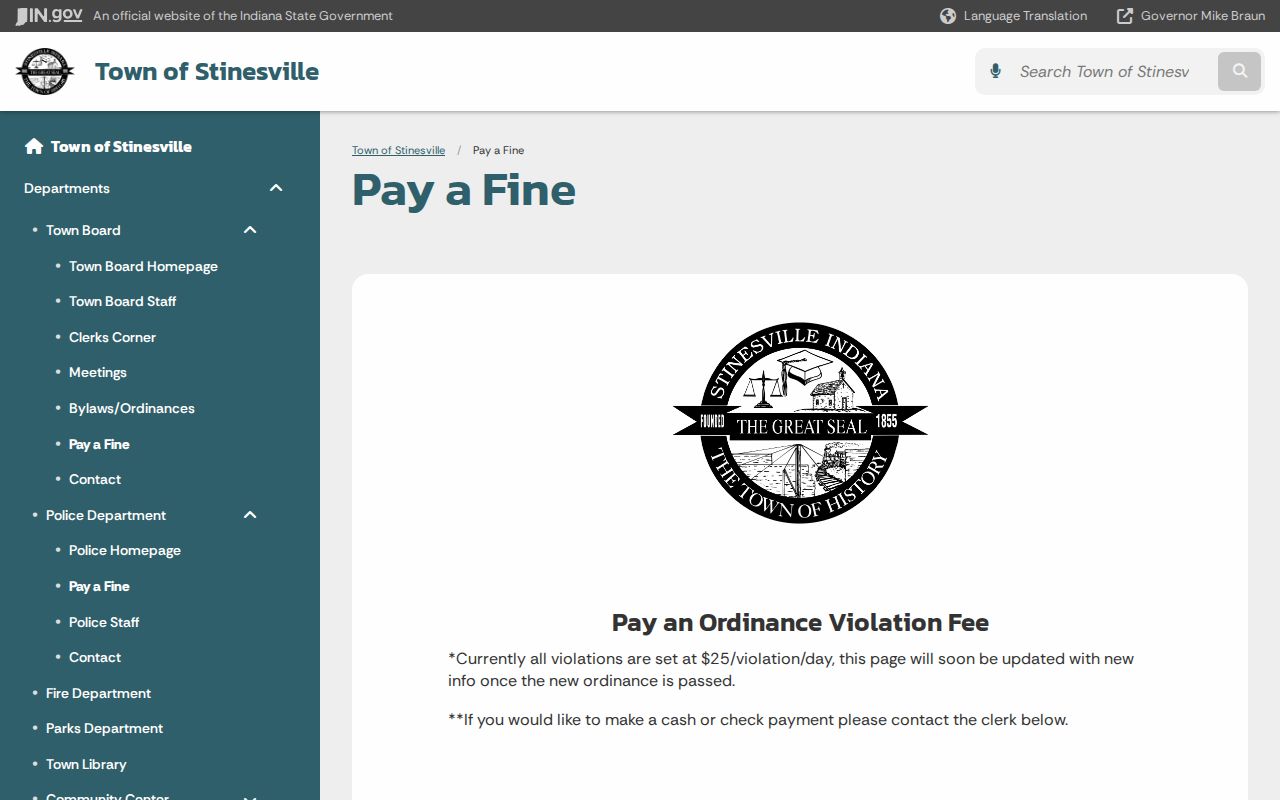
Take that warning seriously. Call the town Clerk before trusting the displayed amount. The page routes cash or check payments through the Clerk and offers an external online option. Keep your receipt and the original notice.
| Item | Starting office | Record to request |
|---|---|---|
| Town ordinance fine | Stinesville Clerk | Notice and payment status |
| State traffic citation | Monroe Clerk | Court case summary |
| Online payment | External processor | Transaction receipt |
Stinesville Traffic Tickets
Know the difference between a town fine and a state traffic citation. Monroe traffic and infraction cases live in Circuit Court records. They are not in any Stinesville municipal docket. Search MyCase by citation number, full case number, or party name. A public result can show an Appear By Date. It can also show the violation, the court, the status, and dated activity. The Monroe Clerk asks searchers to verify a ticket in MyCase before calling. Pay in person, by mail, or through AllPaid. To contest one, follow the Clerk’s Traffic Court instructions. The official Clerk and Prosecutor pages disagree on Friday time details. Confirm before you appear. The full county process is covered in Monroe County traffic court records. A town fine page and a county payment vendor never show the whole court record. Read events in the case summary, then ask the Clerk for a certified copy.
Stinesville Board and Ordinance Records
The Stinesville Town Board page links bylaws, ordinances, payments, and the Clerk’s Corner. It lays out the town’s administrative structure.
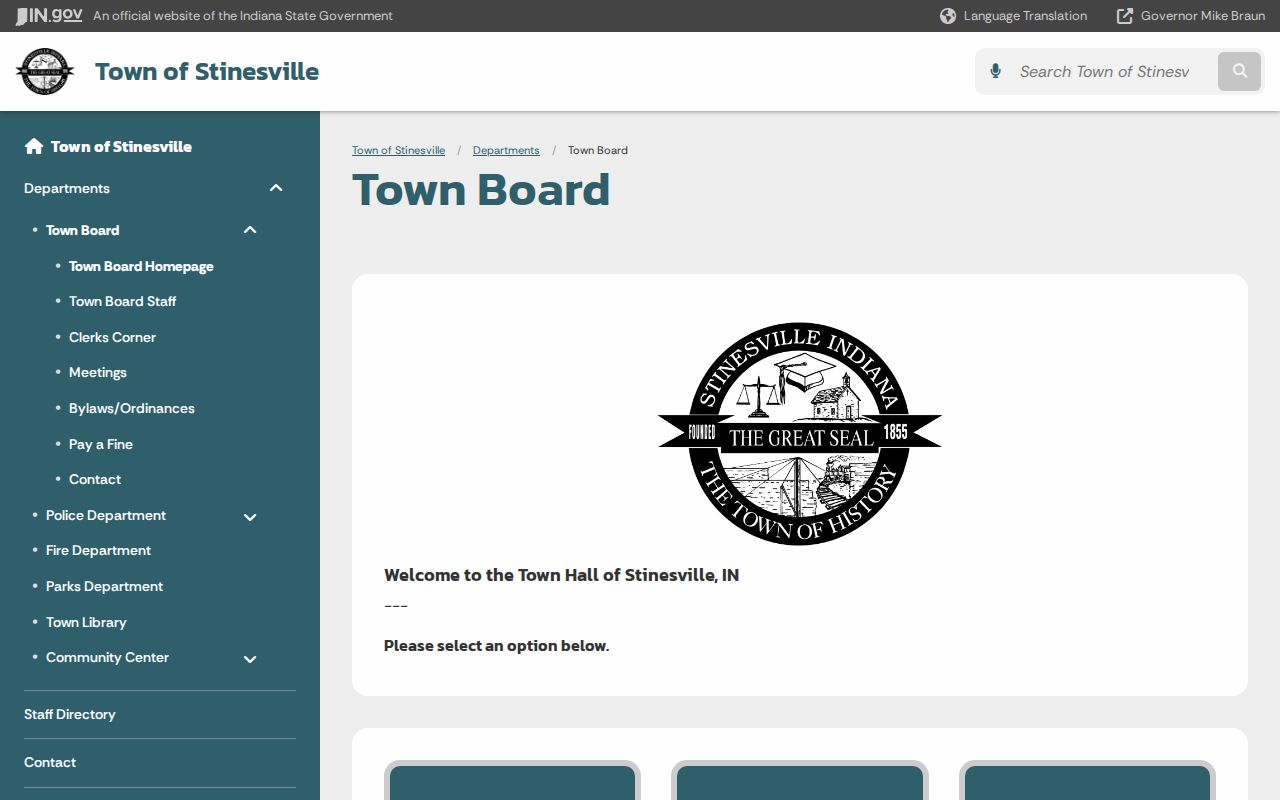
Stinesville board meetings usually fall on the first Tuesday, though election dates and major holidays can shift them. An agenda, ordinance, or minute entry may show the reason. A Clerk record may show why the town took on an obligation. Keep in mind that none of this is a judicial docket.
When a posted ordinance leaves your question open, use the records request route instead. Name the record and the date you want. Suppose a town record shows the matter went to Monroe Circuit Court. Then switch to that case number. The town file and the court file live with different custodians and take different paths to reach.
Where Stinesville Cases End Up
Once a Stinesville matter is filed, it lands in Monroe Circuit Court. The Monroe County Clerk keeps the record across all nine divisions. Every public case number tells a story. It encodes the county, the court, the filing year, the case type, and its sequence. MyCase provides the eligible online view of those files. It is not a separate town-level court.
Docket flow: Stinesville notice › identify town ordinance or court case › Stinesville Clerk or Monroe Circuit Court › Indiana Court of Appeals if appealed.
An ordinance matter that never reaches court stays a Stinesville record. Once it becomes a Circuit filing, the 53C## number is what you need. For the county-wide court and Clerk framework, see the Monroe County court docket overview.
When the online view comes up short, call the Monroe Clerk at 812-349-2614. Or stop by 301 N College Avenue in Bloomington. You can also mail a request that spells out what you want. Give the case number and the record. Add the relevant date. Say whether you need a plain or certified copy.
Stinesville Docket Context and Heritage
Stinesville counted 203 residents in the 2020 Census incorporated-place table. The town's official history points to a late nineteenth-century founding and a limestone and quarry heritage. That small scale is exactly why a Town Hall call works so well when an online page leaves you guessing about a court record or local filing.
Size never changes jurisdiction. Town records stay town records, and Circuit filings stay county court records no matter how small the population. Being small does make direct confirmation easy, though. Before you trust an old fine statement, a broken payment link, or a notice with no named custodian, call the Clerk and check.
Public Access to Stinesville Court Records
Indiana Access Rule 4 starts from a simple premise. Court records are public unless another rule carves them out. Rule 5 then shields designated cases, documents, and data fields. On MyCase, juvenile and mental-health cases are the big exclusions. A blank search has many causes. It can trace to sealing, expungement, protected data, older records, or a simple input error.
Key Rules:
Indiana Access to Public Records Act provides the general public-record framework.
Indiana Access Rule 4 presumes public access to court records.
Indiana Access Rule 5 identifies excluded and restricted material.
Know which office holds what. Ask Stinesville for a town ordinance or payment record. Ask the Monroe Clerk for a Circuit file or certified copy. MyCase serves as the public read-only search, while the Indiana E-Filing System is how filings get submitted.
Read a Stinesville Docket Summary
MyCase labels the court and the case number. It also shows filing date, case type, public parties, status, and status date. The Chronological Case Summary then lists dated events in order. Check the newest entries before trusting an old hearing date or balance. One caution applies here. A docket line records activity, but the document behind it may not be attached.
- Chronological Case Summary
- The public dated register of court events.
- Appear By Date
- The citation deadline for action or appearance.
- Disposition
- The court’s recorded outcome.
- Certified copy
- A record authenticated by the Monroe Clerk.
Scan for resets, later orders, disposition, payment entries, and closure. A transmission to BMV is a court event sent to the licensing agency. It is not proof of any Stinesville court. When a line is too thin to interpret, request the underlying public document. If the issue is a town payment, request the town record and the receipt instead.
A name search can return several people or nothing useful. Narrow it with Monroe County, court, case status, filing dates, or case category. Monroe's own search instructions help here. They permit a partial last name of at least three letters plus an asterisk. A full cause number or citation number is still the safer route. The public view may hide restricted cases and documents. A party access code or registered account can open a different authorized view.
Never treat the online financial display as the final balance. The Clerk warns that MyCase may lag for payment purposes. Ask the Monroe Clerk for the amount tied to a Circuit case. Ask the Stinesville Clerk for a town ordinance balance. Say which notice is involved. Add when it was issued and what proof you need. A transaction receipt proves payment through the processor. A case disposition proves the court result. Keep both, and a later mismatch resolves fast.